
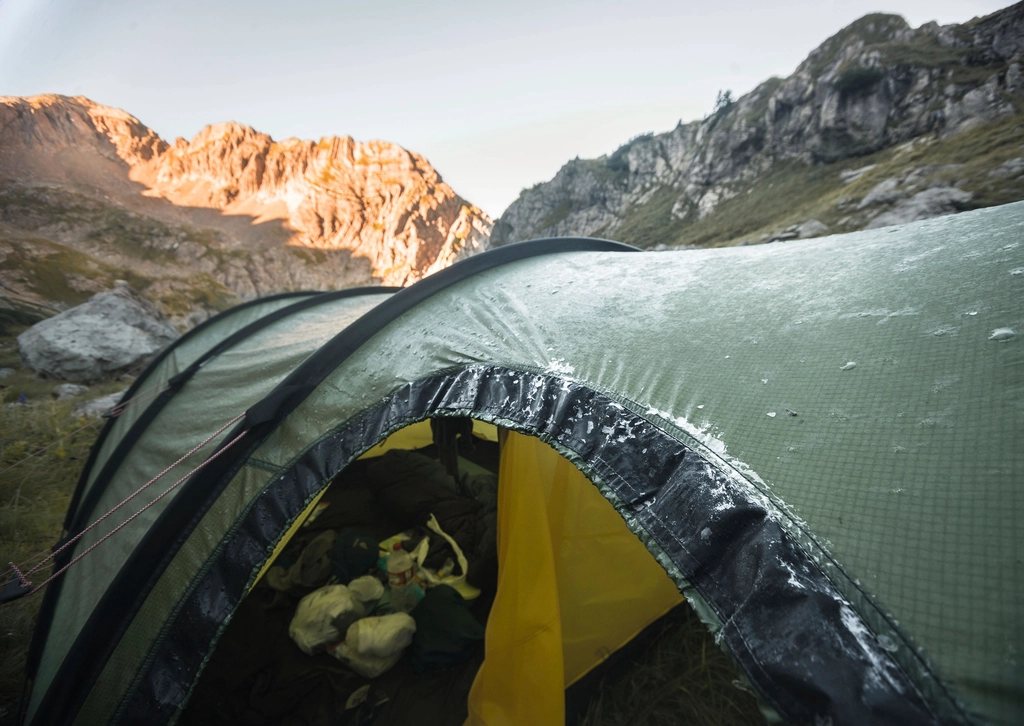
Nothing about camp cooking is difficult until you try it at 4,600 m with a stove that will not light, a pot of rice that refuses to soften and a stream that is the colour of milk. Food and water are where long treks in the Andes and Patagonia go quietly wrong: not in a dramatic emergency but in a slow slide of poor meals, dehydration and a stomach that ruins the second week. The fixes are simple once you know what altitude, cold and glacial silt do to the basics.
Altitude changes the physics of cooking
Water boils at a lower temperature as pressure falls: about 90 degrees at 3,000 m, 87 at 4,000 m and 83 at 5,000 m. Food therefore cooks more slowly. Rice and lentils take half as long again at 4,000 m as they do at sea level, dried beans are hopeless without a pressure cooker, and pasta wants a few extra minutes and more water than the packet suggests. Every extra minute is fuel. Plan for it by choosing food that cooks in ten minutes or less: quick oats, couscous, instant noodles, thin pasta, dried potato flakes, quinoa flakes and instant soups all work, and most are found in the markets of Huaraz, Cusco, La Paz and El Chalten at a fraction of the price of imported freeze-dried meals. Cook with a lid, keep the pot out of the wind and use a foil windscreen; at altitude the wind steals more heat than the thin air does.
The boiling point matters less for safety than people fear. A rolling boil kills the bacteria, viruses and protozoa that matter even at 5,000 m; there is no need to boil for ten minutes, and doing so only burns fuel.
Choosing a stove and finding fuel
Fuel drives the choice. Screw-thread gas canisters cannot fly with you and are sold reliably only in the main trekking towns: Huaraz, Cusco, Arequipa, La Paz, Puerto Natales, El Chalten and Bariloche. In smaller towns supply is patchy and the canisters are often the older puncture type. If your route starts somewhere less obvious, a multi-fuel stove that burns unleaded petrol, kerosene or the refined white gas sold in hardware stores as bencina blanca is the safer bet. Petrol is available everywhere and burns dirty; clean the jet nightly. Alcohol stoves struggle in wind and cold and are slow above 3,500 m.
Whatever you burn, carry enough. Our rule for a party of two is 100 ml of white gas or about 60 g of gas per person per day for breakfast and dinner, plus 20 percent for the cold and the altitude. Snow-melting doubles it. In gas stoves, canister pressure drops as the temperature falls, so keep the canister in the sleeping bag on freezing nights and use a stove with a pre-heat tube if you expect sub-zero cooking. Check your route’s fire rules; open fires are prohibited across the Chilean parks after the wildfires of 2005 and 2011, and in Torres del Paine stoves may be used only in designated shelters at the campsites.
Water: where it comes from and what is in it
Clear, cold water running off a glacier looks pure, and in the high cordillera above the last pasture it usually is. The problem is everything below that. Llamas, alpacas, sheep and cattle graze to 4,500 m across Peru and Bolivia, and their presence means giardia and other protozoa in every stream that drains a meadow. Villages add human waste. In Patagonia the water is generally cleaner, but the popular circuits carry thousands of walkers a season and the streams below the campsites are not what they were. Treat everything that is not a spring or a high glacial source, and treat those too if anyone in the group is prone to stomach trouble.
Glacial water brings a second problem: silt. The fine rock flour in a milky stream clogs filters within litres and shades microbes from ultraviolet treatment. Let it settle. Fill a wide bottle or a pot, leave it half an hour, and decant the clear top two-thirds. A bandana or a coffee filter over the bottle mouth takes out the coarse fraction first. Better still, take water from a side stream that drains snow rather than ice, or from a lake outflow where the sediment has already dropped.
Treatment methods compared
Each method has a place on a long trek, and most of us carry two.
- Boiling: kills everything, needs fuel, useful for cooking water and evening drinks.
- Hollow-fibre or ceramic filters, 0.1 to 0.2 micron: remove bacteria and protozoa but not viruses; fast and taste-free; must not freeze, so they sleep in the bag with you.
- Chlorine dioxide tablets or drops: kill bacteria, viruses and giardia in 30 minutes, cryptosporidium in four hours; light, cheap, cold-tolerant; the backup that always works.
- Ultraviolet pens: quick and effective in clear water, useless in silt, dependent on batteries that fade in the cold.
A filter for the day’s drinking, chlorine dioxide for the camp bottles and for any water that looks doubtful, and boiling for the pot: that combination has kept us healthy through three-week circuits. Iodine is not recommended for long use or in pregnancy and adds a taste that some people never get used to.
Drinking enough
Thin, dry air at altitude pulls moisture from every breath, and cold suppresses thirst. Three to four litres a day is a sensible target above 3,500 m, more on a hot puna afternoon. Start the day with half a litre before walking, carry a bottle where you can reach it without stopping, and drink at every pause. Salt and sugar matter as much as volume; soups, oral rehydration sachets and the salted snacks sold in every market help. Pale urine in the morning is the test. Dark urine and a headache at 4,000 m may be dehydration or may be altitude, and since the treatment for the first is to drink and for the second is to stop climbing, do both.
Camp kitchen habits
Wash hands before cooking, with soap, away from the stream; most trekking stomach upsets come from hands rather than water. Keep raw market food separate from cooked. Carry food out of reach of foxes and mice, which are bold at the popular Patagonian camps. Pack out every wrapper, scatter grey water well away from the source and bury nothing. The rivers that feed the next camp start where you are standing.