
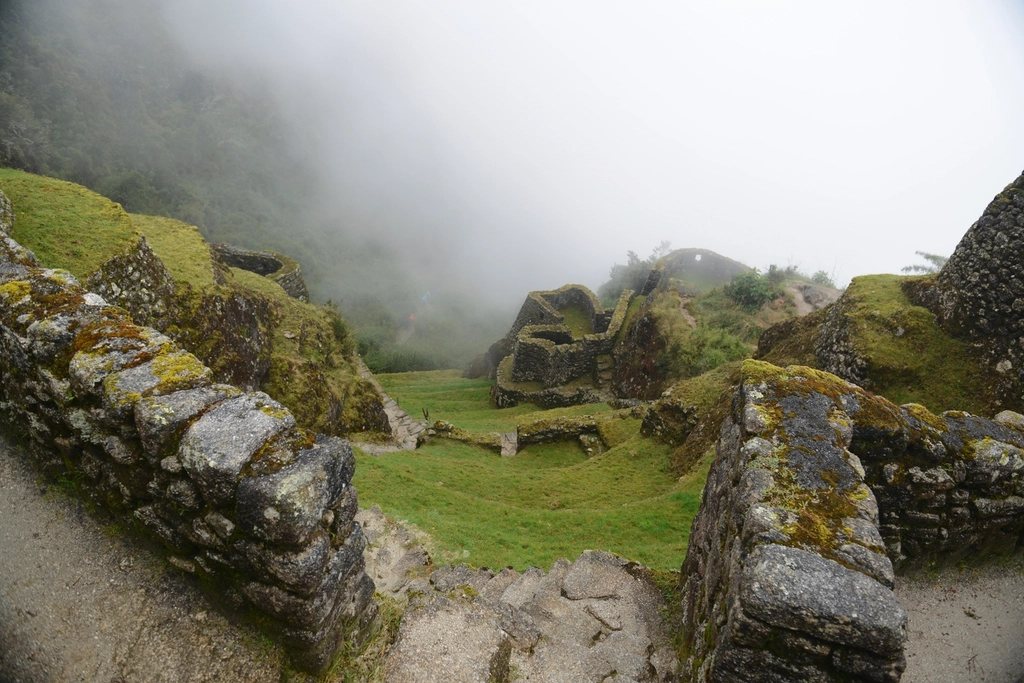
Peru is not an expensive country to walk in, but the treks that draw most people to it – the Inca Trail, Salkantay, Ausangate, the Cordillera Blanca – come with layers of cost that are easy to underestimate from a distance. Some are fixed: park entries, the Machu Picchu ticket, the train back. Some are choices: a porter, a private guide, a night in a real bed. And some are cultural: the tipping conventions every group discusses in whispers on the last night. Here is where the money goes, in general terms, so that the sum you arrive with is the right one.
The currency and the price of things
Peru uses the sol, which in recent years has traded at roughly three and a half to four to the US dollar. Prices in the mountains are quoted in soles; tourist services in Cusco are often priced in dollars, and paying in either is normally fine. Cash matters. Small towns like Ollantaytambo, Mollepata and Huaraz have cash machines, but villages on the trail do not, and a trekking cook cannot take a card. As a rough scale: a set lunch in a market costs a few soles, a hostel bed in Cusco a few tens, and a bottle of water at 4,000 m several times its city price, because a mule carried it there.
Fixed costs: tickets, permits and park entries
Machu Picchu is the big one. Entry is by timed ticket, tied to one of several defined circuits through the site, with a daily cap on visitors; tickets are sold online and at offices in Cusco and Aguas Calientes, and the popular morning slots and the add-on climbs of Huayna Picchu or Machu Picchu mountain sell out weeks to months ahead in the dry season. Whatever trek you choose, you still need this ticket at the end.
The classic Inca Trail adds a permit, limited to a fixed daily number that includes guides, cooks and porters, so that only a couple of hundred trekkers start each day. The trail can only be walked with a licensed operator, the permit is issued in your name against your passport, and it is non-transferable. The trail closes for the whole of February. Permit, Machu Picchu entry and the train are usually bundled into the trek price, which is why the Inca Trail costs several times what four days on Salkantay does. Salkantay, Lares, Choquequirao and Ausangate need no permit, only a few small community or district fees collected at checkpoints, typically a handful of soles each.
Elsewhere, the mountains are managed as national parks with their own entry systems: Huascaran National Park in the Cordillera Blanca charges by the day or with a multi-day pass, and the Huayhuash circuit crosses a string of community lands, each of which collects its own fee at a hut or a rope across the trail. Budget for eight to ten such payments on the full circuit and carry them in small notes. Cusco’s regional sites are covered by a combined tourist ticket sold for one, two or ten days.
Transport that adds up
Peru’s internal flights are short and reasonable if booked ahead; the bus alternative from Lima to Cusco is around 21 hours. The costs that surprise people come at the end of the trek. The train from Aguas Calientes to Ollantaytambo takes about an hour and a half and can cost as much as a night’s accommodation. The bus up the switchbacks to the Machu Picchu gate takes 25 minutes and is likewise not cheap; walking up takes about an hour and a half and costs nothing, which is why so many people do it at 4 am with a head torch. In Huaraz, shared minibuses to trailheads are inexpensive, but a private car to Laguna Paron or Cashapampa is worth splitting between four.
Porters, arrieros and what they carry
On the Inca Trail the crew are porters, and Peruvian law limits each man’s load to 20 kg, with a lower limit for women; the trek price includes the porters who carry tents, kitchen and food, and most operators offer an extra porter share so that you walk with a daypack. Typically this buys you 5 to 7 kg of personal kit, weighed at the trailhead. On every other route in the Cusco region and in the Cordillera Blanca the load goes on mules or horses led by an arriero, with one arriero handling two or three animals. Hiring an arriero directly in villages like Cashapampa, Mollepata or Tinki costs a daily rate for the person plus a smaller one per animal, and you also pay for the animals’ return day and feed the arriero. It is a good deal for a group of three or four and a poor one for a solo walker.
Guides: when you need one and what it costs
A guide is compulsory on the Inca Trail and inside Machu Picchu, and compulsory in practice for any glacier or summit in the Cordillera Blanca, where the park requires a certified mountain guide above certain altitudes. Everywhere else – Salkantay, Ausangate, Santa Cruz, Huayhuash – a guide is a choice. Local guides are paid a daily rate, and the difference between a group departure and a private trek is mostly that you split that rate with fewer people. A group trek from Cusco is the cheapest way to have logistics done for you; going independently with an arriero is cheaper still; a private guide is the most expensive and, for Huayhuash or Ausangate in changeable weather, often the best value.
Tipping: the conventions, in general terms
Tipping is expected on supported treks and is a real part of the crew’s income. The convention is that the group pools an amount on the last evening and hands it over in a short ceremony, with the largest share to the guide, the next to the cook, and equal shares to each porter or arriero. Think in days’ wages rather than dollars: a porter’s share from the whole group over a four-day trek is commonly in the region of a day or two of local wages, the cook’s somewhat more, the guide’s more again. Tip in soles, in small notes, directly to the people, and tip an arriero you hired yourself in the same spirit. Do not skip it, and do not tip so lavishly that it distorts what the next group is expected to give.
A sample budget has five lines, and it is worth writing them down before you book anything:
- Fixed: Machu Picchu ticket, train and bus at the end, park entries, community fees.
- Acclimatisation: two or three nights in Cusco (3,400 m) or Huaraz (3,050 m) before starting, with meals.
- Trek: the group or private price, or, if independent, food, fuel, arriero and animals.
- Extras: sleeping bag hire, a porter share, a night in Aguas Calientes, insurance that covers you above 4,000 m.
- Tips: set the amount aside on day one so it is not the last thing left in your wallet.
Get these five lines right and the trek pays for itself in the first morning above the cloud.